


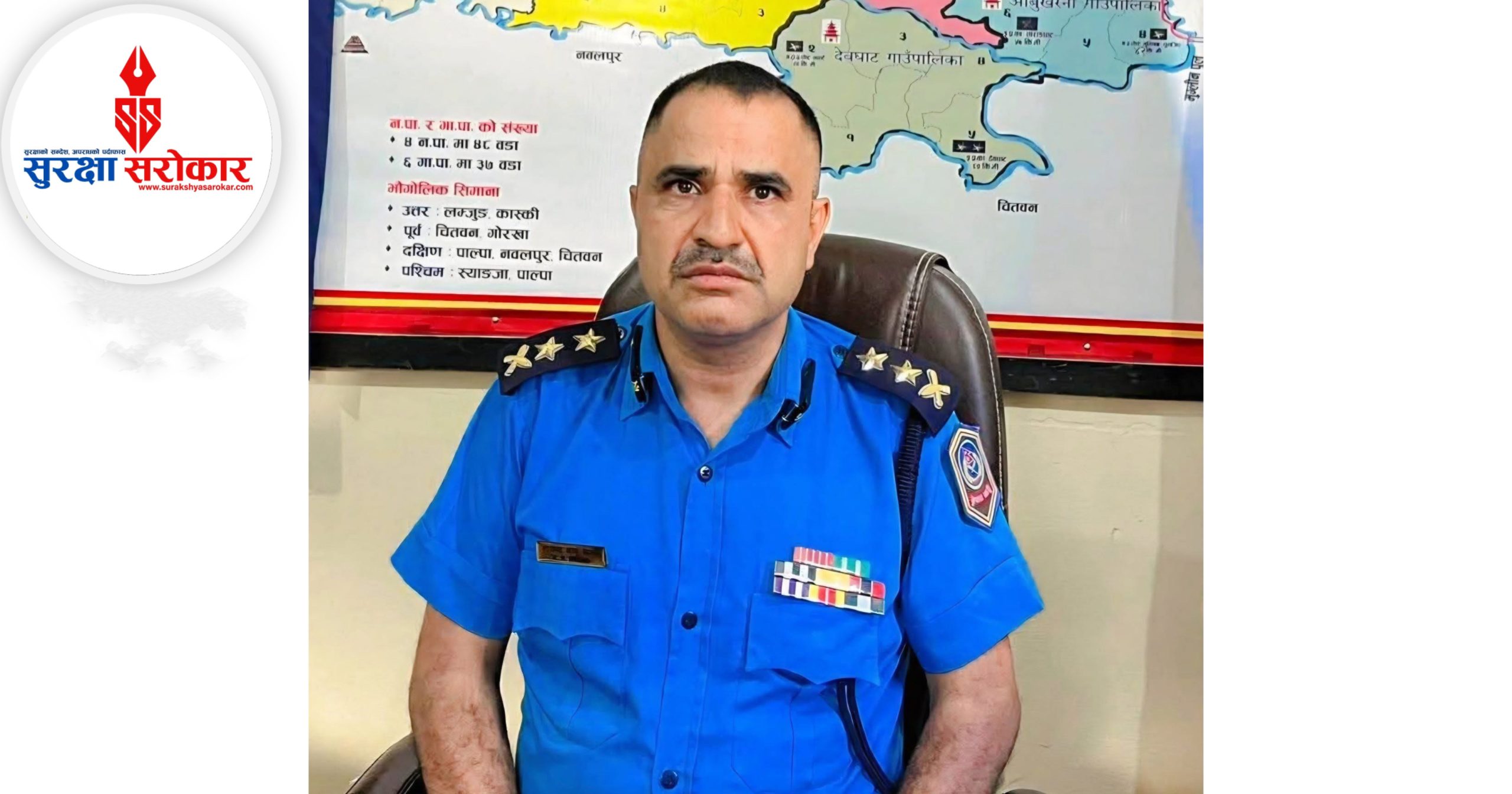
•Rajendra Babu Regmi
Elections in Nepal are increasingly turning into exercises in security management—not because citizens reject democracy, but because political parties repeatedly fail to conduct themselves with responsibility and restraint. As each election approaches, the burden of maintaining peace, order, and electoral integrity falls disproportionately on security agencies, while political actors often evade accountability for the risks they themselves create.

This is not the failure of any single party. It is a systemic problem across the political spectrum—from established forces such as the Nepali Congress, CPN-UML, and the Maoist Centre, to newer actors including the Rastriya Swatantra Party, Rastriya Prajatantra Party, and various Madhes-based and regional parties. Irresponsibility during elections has become normalized rather than exceptional.
The security challenges are now predictable:
- Provocative speeches and aggressive mobilization that inflame local tensions
- Pressure on local administration and security units to act selectively—or to deliberately look the other way
- Politicization of law enforcement, undermining neutrality and professionalism
- Post-election unrest fueled by refusal to accept results and irresponsible public messaging
These are not spontaneous developments. They are deliberate political choices with direct and foreseeable security consequences.
Security agencies are constitutionally mandated to remain neutral. Yet election periods repeatedly expose them to political pressure, public mistrust, and operational overstretch. When parties violate not only the letter but the spirit of electoral law, it is the police and civil administration that must contain the fallout—often with limited resources and under intense public scrutiny.
Perhaps the most dangerous trend is the normalization of law-and-order brinkmanship: testing how far rules can be bent, how much provocation can be tolerated, and how security responses can be politically framed. This approach weakens public confidence in elections, risks localized violence, erodes institutional credibility, and fuels long-term instability.
Political parties must be reminded:
- Security neutrality is not an obstacle—it is the backbone of free and fair elections.
- Irresponsible mobilization of supporters is not a sign of political strength—it is a security liability.
- Undermining institutions for short-term advantage creates long-term national risk.
All parties must urgently commit to:
- Strict compliance with election laws and codes of conduct, in both letter and spirit
- Zero tolerance for intimidation, coercion, or misuse of political influence
- Full respect for the operational independence of security agencies
- Responsible post-election communication, particularly in close or disputed results
Elections should test leadership, vision, and policy—not the capacity of security forces to absorb political recklessness.
If political parties continue to externalize the costs of their behavior onto security institutions, Nepal risks turning elections into recurring flashpoints rather than democratic milestones.
The central question before this election is not whether security forces can manage the risks.
It is whether political parties are willing to stop creating them.
The author is a retired officer of the Nepal Police.


प्रतिक्रिया
सम्बन्धित खवर